Kratom Payment Processing | What Every Merchant Should Know
There is a lot of uncertainty in the kratom market. It can even be difficult...
View more

A kratom merchant account is a credit card processing account underwritten by a bank that knowingly accepts kratom. You need one because Stripe, Square, and PayPal prohibit kratom and can close your account without warning.
Traditional banks and processors classify kratom businesses as “high risk,” even when they are legitimate and well run. That makes stable kratom payment processing hard to find on your own.
Limitless Payment Solutions connects businesses with stable and reliable Kratom merchant account payment processors that understand your industry’s unique challenges. With over 20 years of experience helping high-risk businesses find payment processing solutions, we specialize in getting approvals where others fail.
Through our network of processing partners and deep underwriting knowledge, we match merchants with Kratom payment processing solutions that best fit their business model and risk profile. We help you position your business for approval and connect you with processors that support your industry.
Don’t let denials hold your business back. Apply with Limitless Payment Solutions to find the Kratom payment processing provider that’s right for you.

A Kratom merchant account is a specialized account that allows Kratom merchants to process electronic payments. Because Kratom is often classified as high risk, merchants typically need both a merchant account and a payment processor.
The merchant account receives funds from approved transactions, while the payment processor securely transmits payment information between customers, card networks, and financial institutions to complete the transaction.
Unlike their low-risk counterparts, high-risk payment processors understand the specific risks associated with the Kratom industry.
Key advantages of partnering with a dedicated high-risk Kratom merchant account payment processor include:
The right Kratom merchant account can help businesses navigate industry-specific financial and regulatory risks while maintaining stable payment processing.
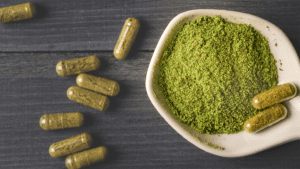
Kratom is a tropical evergreen native to Southeast Asia. Also known as Mitragyna speciosa, its leaves are harvested and dried before being sold in various forms, such as powders, teas, capsules, and extracts.
Though Kratom is a growing industry, many merchants still face account denials, funding holds, and processing restrictions. These challenges make specialized Kratom merchant accounts essential for businesses in the industry. If you’re still in the planning stage, start with our guide on how to start a kratom business.
Here’s what to know about Kratom sales:
Many Kratom merchants assume that if their business is legal and operating responsibly, they’ll be able to obtain a Kratom merchant account. Unfortunately, traditional banks and payment processors often evaluate businesses based on risk categories before approving them for payment processing services.
When underwriting merchant accounts, most financial institutions prefer industries with established regulatory frameworks and predictable risk profiles. Kratom is an exciting industry that is growing and changing. However, traditional banks are often reluctant to assume the perceived risks associated with such a dynamic marketplace.
Some financial institutions have internal policies that prohibit Kratom and other high-risk product sales regardless of a business’s track record. Even merchants with strong Kratom sales records, low dispute rates, and years of successful operation may still face application denials simply because they sell Kratom.
This leaves Kratom merchants looking for alternative merchant account providers that specialize in high-risk industries.
In credit card processing, “high risk” refers to businesses for which traditional payment processors are more likely to incur financial losses. This stems from high chargeback rates, increased fraud risk, uncertain regulatory environments, and industry-specific reputational concerns.
Understanding why Kratom accounts are considered high risk is the first step toward finding reliable merchant accounts and long-term payment processing solutions.

State laws vary. Some states permit sales (sometimes with age restrictions or under a Kratom Consumer Protection Act – KCPA). Others impose outright bans, and some contain a mix of both.
With a lack of uniform oversight and shifting state-level rules, payment processors are skeptical of providing services for Kratom merchants. This is why it’s crucial to work with a company like Limitless Payment Solutions for your Kratom merchant account needs.
The U.S. Food and Drug Administration (FDA) classifies Kratom as an unapproved new dietary ingredient.
The FDA states that Kratom is not lawfully marketed in the U.S. as a drug product, dietary supplement, or food additive. It also warns consumers about potential adverse effects, including liver toxicity, seizures, and substance use disorder, citing a lack of clinical trials proving efficacy and safety.
Kratom merchants often face higher chargeback rates due to customer disputes, product quality issues, or friendly fraud (where customers dispute legitimate purchases through their credit card issuer). Since many Kratom merchants sell their products online, this becomes a bigger risk in the eyes of traditional credit card processors.
Due to the legal ambiguities, FDA warnings, and public perception issues often associated with Kratom, many financial institutions consider working with Kratom businesses as a reputational risk.
For a deeper look at each factor, and how approved merchants manage reserves and chargebacks, read why kratom businesses are considered high-risk.
Many Kratom businesses, especially those new to the market, might initially consider using standard payment processors like PayPal, Stripe, or Square due to their ease of setup and widespread recognition.
However, these come with their own challenges, as most mainstream processors are designed for low-risk businesses. These traditional processors typically have strict terms of service that explicitly prohibit businesses operating in industries they deem high risk, and Kratom almost always falls into that category.

If one of these mainstream processors discovers a merchant is selling Kratom products in violation of their policies, the account may be suspended or terminated with little notice.
Processors may freeze funds or place holds on payments while reviewing account activity or investigating potential policy violations. This can lead to cash-flow challenges for growing businesses.
If your account is terminated, you lose the ability to accept credit card payments. This can disrupt your business operations immediately, leading to revenue loss and damaging customer relationships.
High-risk merchant accounts need specialized support. Most standard processors lack the underwriting expertise, chargeback management resources, and industry-specific knowledge to help Kratom businesses thrive long term.
A merchant account consists of several components that work together to help merchants securely accept transactions, manage risk, and keep revenue flowing.
Every provider and payment solution is different, but merchant processing services may include:
This is a specialized account that temporarily holds funds from a customer transaction before they are transferred to the business’s account.
The payment gateway facilitates secure transaction processing. It handles data collection and encryption during the checkout process. After the payment gateway securely sends payment information, the processor authorizes the transaction and facilitates the movement of funds.
With transactions happening online, it’s important to have fraud prevention tools in place to protect revenue. These tools can provide address verification, transaction monitoring, risk screening tools, and more.
This allows for payments to be collected automatically on a scheduled basis for subscriptions, memberships, or automatic product shipments. These capabilities simplify operations and create a more consistent customer experience.
High-risk merchants may experience chargebacks more than other businesses. Effective chargeback management can help Kratom merchants monitor disputes, respond to chargebacks, and identify trends before they become bigger problems.
Processors typically require documentation that helps underwriters evaluate a merchant’s business model, financial history, and compliance practices.
While specific requirements may vary slightly between processors, the following documents are commonly requested:
The more thorough your application, the easier it will be for underwriters to evaluate your business for approval.
When reviewing Kratom merchant account applications, Marty Carroll, the CEO of Limitless Payment Solutions, explains that he looks for “how much money merchants have in their bank account, what their monthly volume is, and what their average ticket and high ticket size is.”
Limitless Payment Solutions can guide you through the Kratom merchant account application process. We know the Kratom industry and what underwriters are looking for. We help you gather the right application documents, clearly explain your business model, and proactively address compliance concerns.
That means fewer delays and fewer surprises.
Score your business before you apply. Give yourself one point for each item you can say yes to today.
We’ve had merchants approved and processing in less than three days. The fastest files come from merchants who are fully prepared from the start, and what slows a file down is usually how the documents arrive, not what’s in them.
– Send everything in one email, not five or six emails over several days.
– Send PDFs. Unusual file formats slow things down when they can’t be opened or forwarded easily.
– Label every attachment, for example “October 2026 Bank Statement,” “Driver’s License,” or “Voided Check.”
– Use a voided business check or a bank letter. A temporary check that doesn’t show your business name and address can’t be used.
– Startups without business bank history may need three months of personal bank statements instead. Some processors also ask for a utility bill or proof that you own your website domain.
– Stay reachable after you apply. If underwriting calls, pick up. If they email a question, answer as quickly as you can.
None of these are formal requirements. They’re lessons from years of placing high-risk accounts, and they make a real difference in how fast a file gets through.

No setup fee. We give you every fee before you sign.

Available 24/7, Limitless Payment Solutions works tirelessly to help your Kratom business solve payment processing problems in a New York Minute.

We review your file before underwriting sees it, so your application goes in complete and compliant the first time.

We place you only with processors that knowingly accept kratom, so your account isn't at risk of a surprise policy shutdown.

Rapid dispute resolution mitigates chargeback risks, effectively protecting your business’s health.

Protect your investment and customers with Limitless Payment Solutions' fraud protection technology.

Running a Kratom business comes with unique challenges that most other businesses don’t face. Between changing regulations, processor restrictions, and chargeback concerns, finding a reliable payment solution can make all the difference.
Fortunately, stable Kratom payment processing is possible.
At Limitless Payment Solutions, we guide Kratom merchants through the approval process and connect them with payment processors that understand the industry.
Kratom’s legal status in the United States varies by state, and sometimes by county or city. Federally, kratom is not a controlled substance. However, the FDA considers it an unapproved dietary ingredient, and the DEA lists it as a “drug and chemical of concern.”
Crucially, in 2019, the FDA warned consumers not to take Kratom supplements. It’s also illegal for businesses to market Kratom for human consumption with unapproved health claims or to market its proposed benefits as a health supplement. Compliance with all federal and state regulations, including the American Kratom Association (AKA) marketing guidelines, is paramount.
Many U.S. states have enacted or are considering laws restricting or regulating the sale and use of Kratom. These laws are dynamic and subject to change.
As of our latest understanding in October 2026, kratom sales are banned in Alabama, Arkansas, Connecticut, Indiana, Kansas, Louisiana, North Dakota, Tennessee, Vermont, and Wisconsin. (please verify independently for the most current information)
California restricts kratom sales through a state health department action rather than a statute, and Kentucky’s statewide ban is scheduled to take effect January 1, 2027. Some counties and cities also ban kratom inside states where it is otherwise legal.
Many states that allow kratom require buyers to be 18 or 21. See our state-by-state kratom ship-or-block table for checkout rules. It is the merchant’s responsibility to confirm current law before shipping.
The Kratom market is beginning to bloom, and it can be hard to know how to start a Kratom business.
We suggest that you start by understanding the industry, conducting market research, and developing a clear business plan. Decide whether you will operate an online store, a physical retail location, or a hybrid of both, and how you will accept payments.
Because many traditional payment processors classify Kratom as high risk, we recommend working with providers that are familiar with high-risk merchant accounts. This is the best way to get the support you need for long-term success. Limitless Payment Solutions has over 20 years of experience connecting high-risk merchants with payment processors. Get started today.
Kratom businesses require a high-risk merchant account primarily due to the industry’s regulatory ambiguity and perceived risks by financial institutions.
Key reasons include:
Working with a specialized high-risk merchant account service provider like Limitless Payment Solutions ensures a reliable processing solution designed for your Kratom business. It minimizes the constant threat of account closure or payment interruption often experienced with standard, low-risk processors.
For the full breakdown, read why kratom businesses are considered high-risk and how to manage payments.
Yes. What you can sell depends on your state’s laws, the acquiring bank’s policy, and your processor’s policy. Most processors expect lab-tested products, compliant labels, age verification at checkout, and no health claims.
Limitless Payment Solutions does not work with 7-OH (7-hydroxymitragynine) products.
We review your product list with you before you apply. For a personalized assessment, speak with a Limitless Payment Solutions representative today.
We specialize in a wide array of high-risk industries. Our featured industry list provides some examples, but it is not exhaustive. We can often approve any legally operating business! Contact us to discuss your specific industry.
Domestic Kratom merchant account approval typically takes 24 to 48 hours after we receive all necessary paperwork and complete underwriting. The timeline can vary based on the complexity of your business and the completeness of your application.
Most high-risk processors, especially for industries like Kratom, ask for a rolling reserve. Typically, it is around 5% to 10%. In rare cases, depending on processing history and other risk factors, there may not be one.
This reserve is a percentage of your daily batch amounts withheld by the processor for a set period (e.g., 180 days). It offsets the risk associated with the merchant account, primarily potential future chargebacks. The “rolling” part means that after the hold period, the initial funds are released back to you as new funds are withheld, creating a continuous reserve.
Chargebacks are typically debited directly from your bank account. A reserve is a security measure for the processor in case of excessive chargebacks or account closure. We strive for transparency and will clearly explain any reserve requirements for your specific account.
We use NMI whenever we can. It’s the gateway we work with most often for high-risk merchants, and it has proven to be a very good fit for kratom. NMI connects with a large number of processing platforms, so the gateway doesn’t have to change if your processing relationship does.
Some processors require merchants to use their own gateway, and that can be a benefit. Their monitoring and risk tools give them better visibility into the account. If NMI is available, it’s usually our preference; if the processor requires its own gateway, we work within that structure.
Don’t confuse the gateway with the shopping cart. The cart is where your customer places the order; the gateway securely carries that transaction into the payment processing system. Shopify can work as your cart with a third-party payment provider, but Shopify Payments usually isn’t our first choice for kratom. See which e-commerce platforms work for kratom sales.
Kratom merchant account pricing depends on your business model, monthly volume, processing history, and overall risk.
Higher-risk files generally carry higher rates and larger reserves. Be cautious of rates far below these ranges; they often come with hidden fees or unstable accounts. Limitless Payment Solutions walks you through every fee before you sign.
The single most common reason is that the merchant is selling 7-OH products. Limitless Payment Solutions does not place merchant accounts for 7-OH products.
The second problem we see comes after approval: a merchant starts with standard kratom products, then adds CBD, a proprietary kratom blend, or another supplement that was never part of the original application. The bank approved a specific business model and product mix, so that can create a problem very quickly.
Tell us before you add new products. It’s much easier to review a change before it goes live than to deal with it after it becomes an issue.